
Outside Director Roundtable Discussion
Language switcher
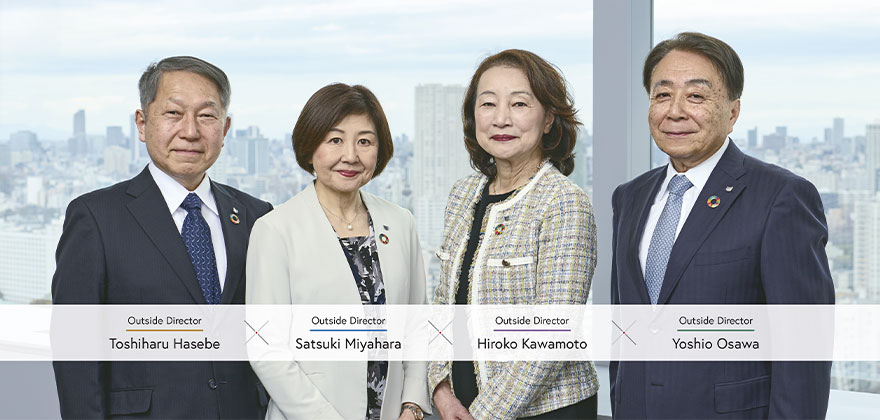
From a Company that Sells Products to a Company that Creates Value. Moving into a New Phase of Growth, Built on the Trust We Have Accumulated.
We asked four outside directors to share their views on everything from their evaluation of the Long-Term Management Objectives (2021-2025) to new challenges in the AI era, the appropriate approach to protecting minority shareholders under the parent-subsidiary listing structure, and expectations toward the Long-Term Management Objectives (2026-2030).
The Long-Term Management Objectives (2021-2025) that Overcame the COVID-19 Pandemic and Achieved Outstanding Results
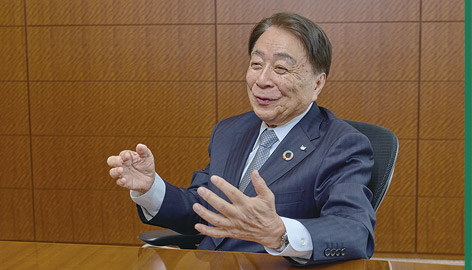
Osawa : For the Long-Term Management Objectives (2021-2025), I highly evaluate the accomplishment of having overcome the severe economic conditions during the COVID-19 pandemic and achieving five consecutive years of increased revenues, profits, and dividends. There are three major factors behind this achievement in the sales strategy. In addition, various financial measures such as the improvement of capital efficiency, the strengthening of corporate governance, and the clarification of management philosophy and logic can also be mentioned as factors.
First, one result of the sales strategy is that the transformation to a service-type business has advanced. The business model was expanded from conventional hardware-centered sales to providing customers with total solutions that incorporate IT software, and the further transformation of this into a service-type business became a major factor in significantly improving performance. Second, close customer engagement was strengthened by carefully tailoring these total solutions to different customer segments and improving customer satisfaction. Third, to transform into a service-type business, aggressive investments exceeding ¥170.0 billion were executed, centered on M&A. This also led to a significant increase in revenue from the BPO and ITO domains.
In addition to these three points, we worked to improve capital efficiency in terms of ROE, actively conducted the acquisition of treasury stock, and eliminated shortterm loans receivable to the parent company. I also appreciate the fact that the dividend level rose to 2.8 times between 2020 and 2025, reflecting the Group's proactive approach to shareholder returns.
Over these five years, we also strengthened corporate governance, an area where overseas institutional investors had particularly called for improvement. The ratio of outside directors was set at 50%, and the ratio of female directors was increased to 25%. I also acknowledge the fact that the Purpose was thoroughly instilled internally before being announced externally. The Company's management stance places the corporate philosophy at the top, with the Purpose, vision, materiality, strategy and planning, and organization and personnel forming a pyramid structure beneath it. These elements have finally been organized, making the logic and philosophy of management clearer.
Business Transformation Leveraging Customer Contact Points as a Strength has Led to a Major Leap in IT Solutions
Hasebe : The relationships of trust with customers we have cultivated through many years of Canon product sales have led to the leap in the IT solutions business. From my own observations from the outside, I have felt that the Company's designated staff are deeply involved in the customer's office and engaged in activities closely tied to the site. A major strength is the ability to provide optimal IT solutions after thoroughly understanding the challenges faced by customers. Over the past five years, I have felt that the Company has become able to offer a wide range of solutions, including security and cloud services.
Although it takes courage to venture into new fields when you have past successes, the management team has relearned about DX and other new fields, and revised evaluation criteria in line with the times, making it easier for the on-site staff to take action. I am impressed that this point has been handled very effectively.
On the other hand, AI remains a challenge. The transformation of business models due to AI is extremely rapid, and responding to this field will be a challenge for the next five years. This is a challenge faced not only by the Company but by the entire market and all companies. Against this backdrop, I believe that companies that respond appropriately will grow going forward.
Osawa : I believe that the further development of highly skilled personnel will be an important issue for the future.
Although the size of the workforce has expanded through means such as M&A, "AI talent" viewed from the perspective of how to introduce AI to reduce costs, increase sales, and improve production efficiency may not yet be sufficient. Because the speed of technological evolution in the field of AI is extremely fast, a dramatic strengthening to respond to this is necessary.
Issues in the Development of Skilled Personnel and Promoting Diversity
Kawamoto : I feel that steady progress has been made on developing skilled personnel and promoting diversity. In line with changes in the business model, the Company has been seriously promoting personnel development so that employees can proactively engage in reskilling such as obtaining digital-related qualifications.
However, beyond such skill aspects, "improvement in employee engagement", which is also listed as a material topics, is becoming increasingly important. It is important to clearly understand what one can contribute within the company and for what purpose, how that brings joy to customers, and ultimately how it connects to one's job satisfaction. I believe it is important to keep this cycle of engagement going and improve its quality. The next step is the phase of putting this into action.
Another issue is gender diversity. Even though the ratio of female directors reached 25%, this consists of outside human resources and without progress in appointing from within the Company, it cannot be called real reform. Institutional investors are also watching this point. Rather than addressing it because of external demands, it is necessary to accelerate gender diversity after firmly sharing a sense of purpose. I have strongly advocated for this point on every occasion.
For the Company whose business model itself is changing, promoting diversity and inclusion is an important element. Moreover, it is necessary to promote the mobility of human resources by utilizing systems such as the in-house recruiting program and to visualize mechanisms that allow women in particular to take on a wide range of roles.
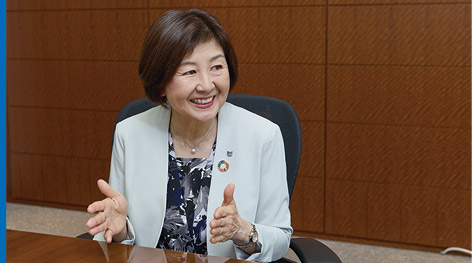
Miyahara : Looking back on my own year in office, I have the impression that gender diversity has been addressed properly. However, further acceleration will be needed going forward to turn this into concrete results. Just as in the IT industry, women remain a minority in the accounting profession, yet in some overseas countries the percentage of women is high, so it is not at all a field that is unsuitable for women. It is important for the Company to create an environment in which female employees can fully demonstrate their abilities and to encourage them to do so. If more role models emerge from within the Company, the awareness that it is possible for oneself as well will spread and more people will follow. I have high expectations for the future regarding this point.
Toward Reforming the Revenue Structure and Improving Capital Efficiency
Miyahara : In terms of finances as well, there were major developments over the past five years, including the elimination of short-term loans receivable and M&A. The timing of assuming my position coincided exactly with the elimination of short-term loans receivable to the parent company. I had heard that cash allocation had been strongly emphasized for some time, and I remember feeling that the Company was working on it very diligently and steadily. Looking at the current financial strategy, I am impressed that the amounts allocated to growth investments are clearly stated and a track record is being steadily built.
The Company's revenue structure has shifted to a form that secures revenue from the stable Canon products business while expanding the IT solutions business. Although the market for MFPs and printers in Japan is mature and is not expected to grow significantly in the future, targeted proposals to customers who require printing can lead to maintaining sales and improving profitability. Furthermore, within the IT solutions business, the trend of allocating resources toward higher-margin service-type businesses appears to be functioning well.
Regarding the stock price, while I recognize that market evaluation has improved to a certain degree, I also feel there may still be room for greater expectations and a higher evaluation. While management is also emphasizing perspectives such as capital efficiency, if this thinking can be instilled at an on-site level and connected to concrete actions, further progress can be made. This can be achieved by understanding how much capital is used to generate certain sales and profit, and to improve that capital efficiency by determining which indicators to focus on, from what perspective.
Osawa : Although the stock price has risen significantly compared with five years ago, the Board of Directors recognizes that further upside is still possible. A stock split was implemented to increase the number of individual investors, and the Board of Directors continues to discuss ways to further enhance corporate value.
AI Readiness Challenged by the Long-Term Management Objectives (2026-2030)
Osawa : What I am paying particular attention to in the "Long-Term Management Objectives (2026-2030)" is the Medium-Term Management Plan covering the first three years. Although the numbers may seem like a rather challenging goal, I do not view them that way. I have deep trust in the decisiveness and direction of the current management team, which achieved five consecutive years of increased revenues, profits, and dividends, based on extensive discussions at meetings of the Board of Directors and elsewhere, and I believe there is still significant room for growth. Another important point is the response to AI. For example, if AI can be effectively utilized in software development, productivity and earnings power should increase dramatically. I believe that the next two to three years will be critical for the Company to change its structure to respond to business models in the AI era. To achieve this, we will need to invest more than ever before in AIrelated areas. Fur thermore, regarding the establishment of a third major revenue pillar following Canon products and IT solutions, I hope the various current measures will bear fruit and that a concrete path forward will be realized over the next three to five years. I have high hopes for the current management team.
Hasebe : The targets in the Medium-Term Management Plan of ¥400.0 billion for the IT solutions business and ¥140.0 billion for services and outsourcing are viewed as very aggressive targets. However, I believe that achievement is possible by focusing on fields such as security, BPO, and ITO. In order to achieve this, accurately responding to the turning points where technology and business models change significantly and determining how to advance initiatives such investments, personnel development, and M&A toward them will be future challenges.
Regarding outsourcing as well, simply introducing AI does not mean it will work well when replacing tasks previously performed by people. If we can make AI properly learn the knowledge, experience, know-how, and business processes that the Company has cultivated over the years, it will be a great advantage. Combinations with technologies such as image analysis and image diagnostics owned by the parent company Canon also hold tremendous potential.
Utilization of M&A Human Resources and Integration of Organizational Culture
Kawamoto : From the perspective of human capital, I view M&A and investments as a form of diversity in a sense, and see the challenge as how to utilize newly added human resources from outside the company. It is important that in addition to our existing resources, the inclusion of human resources obtained from outside leads to synergies. The same applies to culture, where it will be necessary to skillfully incorporate different corporate cultures while rethinking our conventional ways of doing things as needed.
Miyahara : Recently, information disclosure on how investments in human capital lead to financial indicators such as ROE has been attracting attention. However, such initiatives do not produce results visible in numbers in a short period of time. I feel it is necessary to advance disclosure even further and more actively to help investors understand this point. Showing a story of what we are working on and where we are aiming for would be a first step.
Osawa : Through M&A over the past few years, we have been able to bring on board more than 2,000 employees, especially many talented IT personnel. These human resources are expected to become one of the important engines for our next growth drive. On the other hand, it is not easy to understand each other and integrate different cultures, ways of thinking, and working styles. However, if this works well, these employees should become an even greater force over the next five years.
Kawamoto : The important thing is the ability to engage in dialogue. Rather than hierarchical relationships, it is important to ensure psychological safety, share opinions, and foster an atmosphere of building things together. I hope that improvements in engagement and governance stated as material topics will be advanced with determination as important management issues.
Effective Governance Challenged Under the Parent-Subsidiary Listing Structure
Osawa : The parent-subsidiary listing structure is a very significant governance theme for the Company. Investors have repeatedly asked whether it is truly acceptable to remain under a parent-subsidiary listing structure and what significance or benefits exist in being listed as a subsidiary. That is precisely why we have emphasized ensuring transparency in situations where conflicts of interest could arise. A symbol of this is the Special Committee. The Special Committee was originally established to heighten transparency in decision-making so that situations that could be viewed as conflicts of interest between minority shareholders and the controlling shareholder would not arise. The Committee was convened multiple times last year, and even deeper discussions were held during the previous acquisition of treasury stock. We operate in a manner that prevents conflicts of interest even while under a parent-subsidiary listing structure, and we have put in place a system to explain this to investors.
Of particular importance in discussions was our business structure. While the Company holds exclusive sales rights for Canon products, the appropriateness of purchase prices from the parent company and sales prices in the market must always be monitored from the perspective of protecting minority shareholders. If purchase prices were unilaterally raised, profits could shift toward the parent company and potentially cause disadvantages to the subsidiary's shareholders. Given these points, continuously monitoring purchase prices and confirming their appropriateness has also been an essential initiative. The same applies to acquisition of treasury stock, where maintaining an attitude of treating all shareholders fairly is important. Ultimately, the question that must be answered is what meaning exists in being under a parent-subsidiary listing structure itself. We have faced this question head-on while thoroughly ensuring transparency and fairness, and believe it has built a governance structure that is trusted by investors.
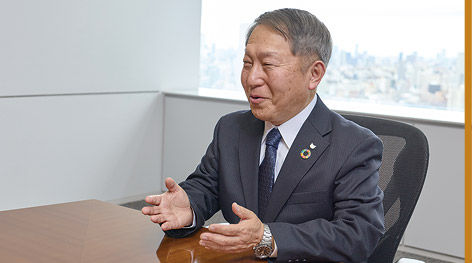
Hasebe : The Company handles SI/solutions, Services/outsourcing, and IT products/system construction domains that differ from the parent company, and the ability to make decisions independently from the parent company is a major strength.
In terms of recruiting human resources, being an independent listed company should also be an advantage. On the other hand, we are also fully leveraging the Group's strengths such as IT solutions combined with Canon products. I view the balance between these two businesses as working well at this point.
Kawamoto : The Nomination and Remuneration Committee is one governance area that investors pay particular attention to. Especially, we recognize that the officer nomination policy and approach to remuneration are important themes that demonstrate the Company's governance stance. In this context, our role as outside directors participating in the Committee is very significant. First, in terms of operation, the frequency and manner of holding Committee meetings should be more systematic. Rather than simply holding a series of meetings, it is important to set certain milestones within the fiscal year and establish a cycle of continuously deepening discussions. Rather than holding meetings on an ad hoc basis, we believe that the effectiveness of the Committee will be enhanced by organizing issues throughout the year. Additionally, although there is a tendency to emphasize a structure centered on outside directors for committee composition, it is important first to make it function as a forum for substantive exchange of opinions rather than a formality. On that basis, it is necessary to have ongoing discussions regarding topics such as succession plans, remuneration levels and composition, methods of reflecting performance evaluations, and how to incorporate non-financial indicators.
There is also the issue of whether it is acceptable to evaluate officer remuneration based solely on single fiscal year performance. While single fiscal year performance is linked to the targets of the Medium-Term Management Plan, if the emphasis is on long-term corporate value enhancement, the remuneration system should incorporate medium- to long-term perspectives. I appreciate the fact that a process for continuously discussing these important issues has been set in motion. Going forward, making it more systematic and substantive will be the challenge.
Miyahara : The policy of targeting a payout ratio of 40% or above must be considered not only in terms of how much is to be distributed as dividends, but also how the portion not distributed as dividends is to be utilized. In the Long-Term Management Objectives through 2030, targets of ¥100.0 billion in total dividends and ¥200.0 billion growth investments are set, and the policy of allocating created cash to shareholder returns while also firmly directing it toward growth investments to enhance future corporate value is very clearly indicated. I expect the Company to continue meeting market expectations from the perspective of total shareholder returns, which includes not only the payout ratio but also stock price appreciation. If it becomes a stock that individual investors feel greater affinity toward, it should also help build a stable shareholder base.
The growth investments announced in January 2026 have also been carefully discussed on multiple occasions. Not only large-scale investment projects but also relatively small-scale investment projects that plant seeds for the future are appropriately reported to the Board of Directors and a system for monitoring is in place. Although not everything will necessarily lead to results as planned, I hope that new seeds of growth will emerge and grow out of them, and believe the Board of Directors must continue to monitor this as well.
Fulfilling the Responsibilities of Outside Directors
Osawa : What I value most as an outside director is carefully monitoring whether the standing management team is conducting management without governance issues. In addition to this, offering advice for the future and expressing opinions on the strategic nature of management and medium-to long-term direction of the company are also important roles. Detailed discussions are held with the management team, particularly with those in the executive officer-class, through Executive Officer Meetings held twice a year and other channels. As outside directors, we try to talk directly to the people who plan and implement growth strategies to try to understand as much as possible about how they feel and what they are focusing on.
Hasebe : Given the relationship under the parentsubsidiary listing structure, paying attention to conflicts of interest and protecting the interests of minority shareholders is of utmost importance, and we are consciously working on this issue on a daily basis. In addition to meetings of the Board of Directors, we also participate in the Management Committee, Executive Meetings, and even Executive Officer Meetings held at off-site locations and more to obtain information on management issues and important matters that are routinely discussed in executive divisions. As we are steering our business model away from one centered on the sale of Canon products and toward IT solutions, risks of different kinds from before are emerging one after another. I have been providing advice on such points on many occasions based on my own experience in the IT solutions industry.
Kawamoto : I am eager to learn the history of Canon and Canon Marketing Japan thoroughly in order to fulfill my role as an outside director. We must learn the ideas that have been cultivated from the past in order to understand the present. Against this backdrop, there are things that must be carefully protected without change and things that must be changed according to the times, but I believe that these are not necessarily contradictory and that it is possible to make the most of them in a compatible manner. With this awareness, I try to participate as much as possible in meetings, site visits, exhibitions, and other opportunities that the Company provides. Furthermore, even if you are an outside director, you do not understand everything. Although each of us has different backgrounds and experiences, we consciously try to express our opinions from our own perspectives, while also valuing dialogue among outside directors.
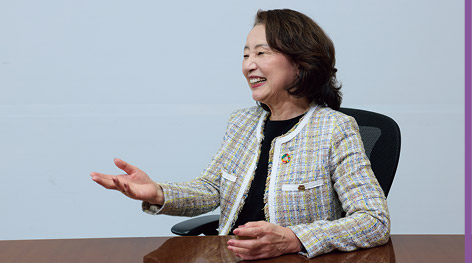
Miyahara : Because we are in an external position by definition as outside directors, we believe it is important to view things from an objective perspective and firmly communicate what needs to be conveyed. Of course, supporting the Company's growth is also important, but given the situation as a listed subsidiary, we will always keep in mind the awareness of not harming the interests of minority shareholders while performing our duties.
-
*
The content of this page is based on information at the issuance of the integrated report.